





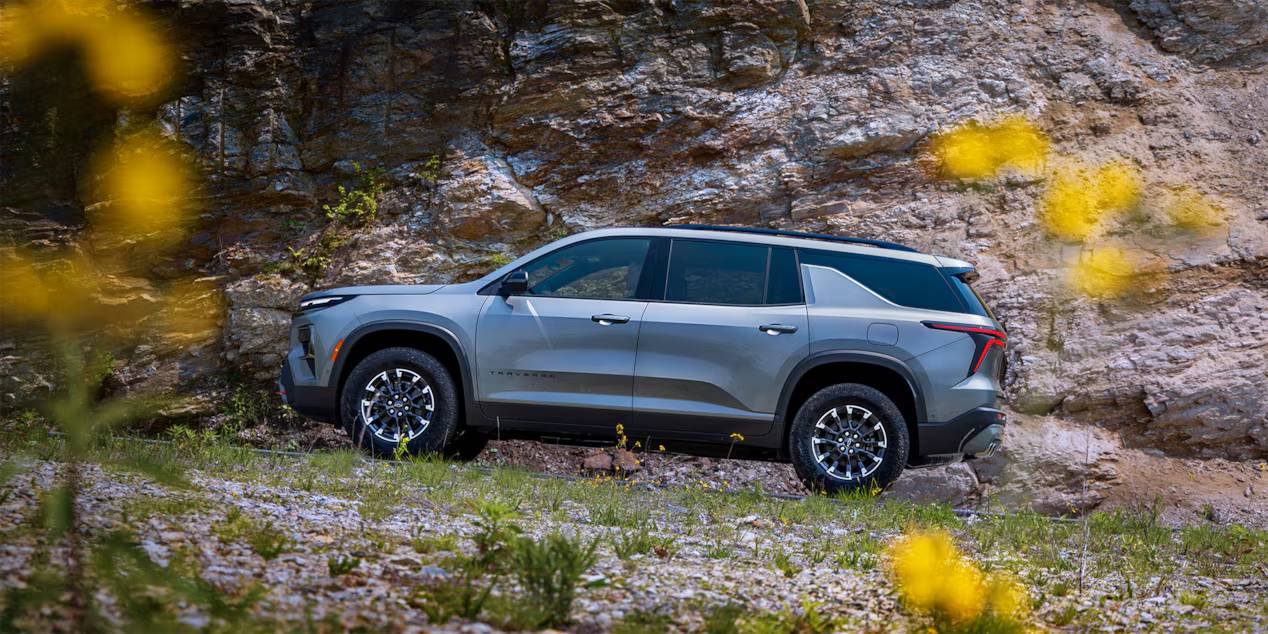
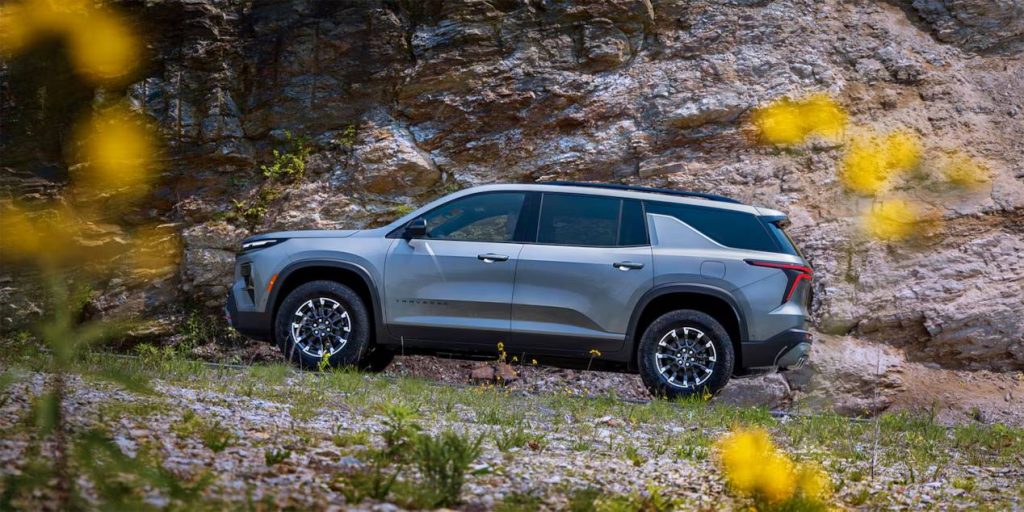
Shopping for a midsize SUV that can handle school runs, weekend getaways, and everything in between? The 2026 Chevy Traverse and 2026 Honda Pilot both promise to deliver, but which one actually fits your family’s lifestyle? At Titus-Will Chevrolet, we have compared these three-row SUVs side by side to help Tacoma-area families make an informed decision based on performance, space, and real-world capability.
At a Glance: 2026 Chevy Traverse vs 2026 Honda Pilot
The Chevrolet Traverse vs Honda Pilot debate comes down to what matters most for your daily driving.
Under the hood, the Traverse runs a 2.5L turbocharged inline-4 producing 328 hp and 326 lb-ft of torque. The Pilot uses a 3.5L V6 rated at 285 hp and 262 lb-ft. That gives the Traverse 43 more horsepower and 64 more lb-ft of torque, delivering stronger acceleration for highway merging and passing. The Traverse pairs with an 8-speed automatic, while the Pilot gets a 10-speed.
Both SUVs seat up to 8 passengers, though the Traverse offers a 7-seat configuration and the Pilot drops to 7 seats in the TrailSport trim. Where the Pilot pulls ahead is cargo space: 113.7 cu. ft. behind the first row compared to the Traverse’s 97.6 cu. ft. The Traverse is slightly longer overall at 204.5 inches vs. 200.1 inches.
Towing capacity maxes out at 5,000 lbs for both when properly equipped, though the Pilot drops to 3,500 lbs in FWD form. Fuel economy is a wash at an estimated 22 MPG combined for the FWD versions of each.
On safety, the 2025 Chevrolet Traverse earned a 5-star overall NHTSA crash test rating, which carries over to the 2026 model. The 2025 Honda Pilot earned an IIHS Top Safety Pick award, and while NHTSA results for the refreshed 2026 Pilot are pending, the previous generation received 5 stars as well. Both come standard with Apple CarPlay and Android Auto.
Want to feel these differences yourself? Schedule a test drive at our Parkland location to see how the Traverse handles Pacific Northwest roads.
Performance and Powertrain Comparison
Engine Power and Driving Dynamics
The Traverse’s 2.5L turbocharged engine cranks out 328 horsepower and 326 lb-ft of torque, giving noticeably stronger acceleration than the Pilot’s 3.5L V6 (285 hp, 262 lb-ft). This power advantage shows up when you’re merging onto highways or need to pass slower traffic. The Traverse matches its engine with an 8-speed automatic that finds the sweet spot between performance and efficiency.
The Pilot rides smoothly and comfortably, but drivers who want responsive acceleration will find the Traverse’s turbocharged setup more satisfying. The gap becomes obvious when you’re loaded with passengers and cargo heading up mountain passes or towing recreational gear.
Towing Capacity and Real-World Use
Weekend warriors need to pay attention here. The Traverse hits 5,000 lbs maximum towing capacity whether you choose FWD or AWD, making it simple to haul boat trailers, camping gear, or recreational vehicles without worrying about which drivetrain you picked.
The Pilot only reaches 5,000 lbs with AWD models. FWD versions max out at 3,500 lbs, which limits your options if you want towing capability without paying for AWD. For families who regularly tow equipment for outdoor adventures (common around here), the Traverse gives consistent capability no matter your drivetrain choice.
Interior Space and Passenger Comfort
Three-Row Seating That Actually Works
The Traverse fits passengers comfortably in all three rows. Second-row riders get generous legroom and headroom, while the third row genuinely works for adults on longer trips. This matters when you’re carpooling with other families or when teenagers need actual space instead of cramped emergency seating.
The Pilot has three rows, but that back row feels tight for adult passengers. Parents who transport older kids or offer rides to relatives will notice how the Traverse doesn’t force anyone into uncomfortable positions.
Cargo Space That Works for Real Life
The Traverse provides 98 cubic feet of maximum cargo volume with rear seats folded. While the Pilot offers more total cargo space (113.7 cubic feet), the Traverse delivers where it counts for daily use: 22.9 cubic feet behind the third row compared to the Pilot’s 18.6 cubic feet. This means you get more usable space with all passengers aboard.
When you fold the second and third rows, the Traverse’s 98 cubic feet handles sports equipment, vacation luggage, and home project supplies without issue. The flexible storage setup lets you configure space to match whatever you’re hauling, and the flat load floor makes sliding items in and out easier.
For most families, the Traverse’s cargo capacity is more than adequate. That extra space behind the third row often determines whether you need to leave gear behind or can load everything for weekend trips with a full crew aboard.
Technology, Infotainment, and Safety Features
The Traverse comes with a larger standard touchscreen that makes navigation, music selection, and phone integration easier to manage while driving. The interface responds quickly and doesn’t require multiple taps to reach commonly used features.
Safety features deserve attention here. The Traverse includes a comprehensive suite of driver-assistance technologies as standard across its lineup. Parents get peace of mind knowing these protective features come included rather than requiring expensive upgrades.
The Pilot offers advanced safety systems, but many only appear on higher trim levels. Budget-conscious families might find themselves choosing between desired features and affordable pricing. The Traverse’s approach of including more safety tech as standard removes that uncomfortable decision.
Trim Levels and Available Configurations
Understanding how each SUV’s trim lineup works helps you find the right configuration for your budget and needs.
The Traverse offers more configurations, letting buyers tailor their SUV to match specific preferences and budgets. At the base LT level, you get a turbo engine, 8-speed automatic, 18-inch wheels, and cloth seats. Step up to the RS and you can add AWD, a larger screen, heated seats, and surround vision. The Z71 brings a tow package, off-road suspension, and premium audio for buyers who need trail-ready capability. At the top, the High Country delivers ventilated seats, an HD surround camera, and luxury materials throughout. Whether you want off-road capability, luxury appointments, or value-focused basics, there’s likely a Traverse trim that fits. Browse our new Traverse inventory to explore available configurations.
The Pilot provides solid trim options but doesn’t match the Traverse’s variety. The base trim comes with a V6 and 10-speed automatic paired with Honda Sensing basics. The EX-L adds AWD and a ventilated seats option, while the Touring brings leather and advanced AWD traction. The Black Edition rounds out the lineup with elite features and a premium interior. Families with specific requirements might find themselves compromising on features or paying for packages that include unwanted items just to get what they actually need.
Pricing and Overall Value
Value matters in the competitive midsize SUV segment. The Traverse typically starts at a lower price point than the Pilot while delivering comparable or superior features. This pricing advantage continues across the lineup, making it easier for families to get the configuration they want without stretching their budget.
When you compare dollar for dollar, the Traverse delivers more vehicle for your investment. The combination of lower entry pricing, generous standard features, and higher towing capacity creates a compelling value proposition. Families looking to maximize their buying power will find the Traverse offers real-world capability without premium pricing, making it a smart choice for budget-conscious buyers who refuse to compromise on space or functionality.
Why the 2026 Chevy Traverse Makes More Sense
The Traverse stands out as the practical choice for families who need a versatile, capable SUV that handles real-world demands. Its powerful turbocharged engine provides 43 more horsepower than the Pilot, while the consistent 5,000-lb towing capacity across all drivetrains eliminates configuration guesswork.
Add in the superior fuel economy, quicker acceleration, and the confidence of proven GM engineering, and the Traverse becomes more than just a transportation solution. It’s a family command center built for the long haul, delivering dependable performance through years of daily commutes, road trips, and everything in between.
Schedule Your Traverse Test Drive
Experience how this SUV handles, how comfortable the seating feels, and how the technology works in person by visiting us at Titus-Will Chevrolet. Located at 11011 Pacific Ave S in Parkland, we’ve served Pacific Northwest families since 1938 as part of Washington State’s largest volume auto group.
Our experienced team can walk you through different Traverse configurations, explain financing options for various credit situations, and answer specific questions about how this SUV fits your family’s lifestyle. Our state-of-the-art facility includes a certified service center, ensuring your Traverse receives expert care long after you drive it home.
Whether you’re coming from Tacoma, Olympia, Puyallup, Lakewood, or Joint Base Lewis-McChord, we make the shopping experience straightforward and pressure-free. Our finance department offers flexible loans and leasing options, while convenient services like online purchasing with home delivery and trade-in valuation help streamline the process.
Schedule your test drive online or contact our sales team at 253-448-8157 to discover why the 2026 Chevy Traverse might be the perfect fit for your family’s next adventure.
Connect with us


