




Titus-Will Chevrolet-Tacoma

Blog

Chevy Tahoe vs. Suburban: 2026 Comparison Guide

Chevy Tahoe

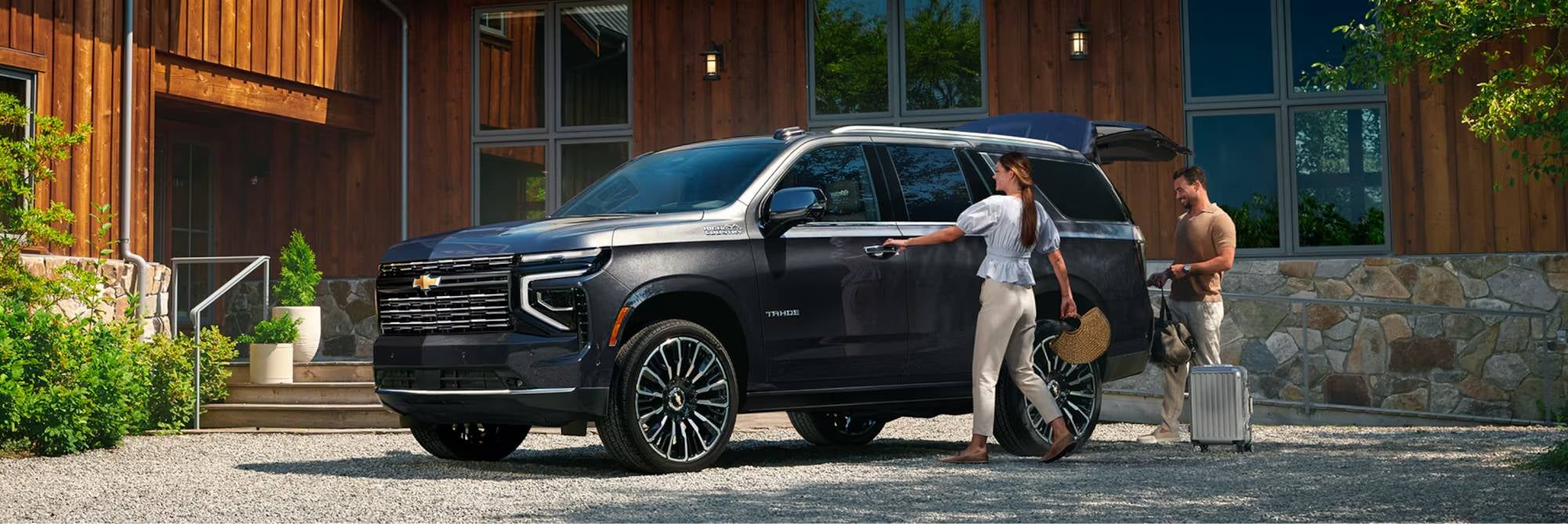
The 2026 Chevy Tahoe and Suburban are two of the most popular full-size SUVs. Both offer spacious three-row seating for up to eight passengers (seven in some trims), powerful engines, and the latest technology. But which one is best for you? This guide compares the two to help you decide.
Chevy Tahoe

2026 Tahoe vs Suburban: Size and Dimensions Breakdown

While both models are full-size SUVs, there are some noticeable differences. The Suburban is larger, measuring 226.3 inches long vs. 211.3 inches for the Tahoe. Their widths and heights are similar, at around 81 inches wide and 76 inches tall for both models. Each SUV offers around 8-9 inches of ground clearance, which is suitable for light off-road conditions.

Is the Suburban bigger? Yes, the Suburban's longer 134.10-inch wheelbase (vs. the Tahoe's 120.90 inches) provides more interior and cargo space across all three rows, making it ideal for large families or anyone needing to carry lots of heavy gear.

Let's explore the Tahoe vs. Suburban cargo space. The Suburban offers 41.5 cubic feet behind the third row vs. Tahoe's 25.5 cubic feet. With all rear seats folded, the Suburban maxes out at 144.7 cubic feet, nearly 18% more than Tahoe's 122.7 cubic feet. Second-row cargo space is larger in the Suburban too, at 93.80 cubic feet vs. the Tahoe's 72.5 cubic feet. That being said, headroom is the same across both models, as is front and second-row legroom, shoulder room, and hip room.

The difference begins with third-row legroom, with the Suburban offering slightly more legroom (36.70 vs. 34.90 inches) and shoulder room (62.80 vs. 62.70 inches). The Suburban is also heavier than the Tahoe (5,723 vs. 5,580 pounds), which may affect fuel efficiency numbers when fully loaded.

Performance and Capability Face-Off

Both models share the same powertrain lineup: a 5.3-liter V-8 (standard), an optional 6.2-liter V-8, and a 3.0-liter Duramax diesel. The Tahoe slightly edges out the Suburban in towing capacity, with a max tow rating of 8,400 pounds (with Max Trailering package) compared to the Suburban's 8,300 pounds. This is marginal, as it's the Tahoe's slightly lower curb weight that results in better towing efficiency.

Both SUVs have similar gas mileage, though the Tahoe typically offers better fuel economy in the city due to its smaller size. Diesel variants provide the best efficiency. While the EPA has yet to rate the 2026 model, 2025 Tahoe models were rated at 22 mpg city and 26 mpg highway for diesel models, or 15 mpg city and 20 mpg highway for gas variants. The 2025 Suburban was rated at 21 mpg city and 26 mpg highway for diesel models, and the same fuel economy as the Tahoe for gasoline models.

Technology and Interior Features Analysis

Tahoes and Suburbans come equipped with a large 17.7-inch touchscreen infotainment system featuring Google Built-In and wireless Apple CarPlay and Android Auto. Both have the convenience of a wireless charging pad and an onboard Wi-Fi hotspot. A Bose sound system and a rear-seat entertainment system are available on both. Shared advanced safety tech includes available adaptive cruise control with a hands-free driving mode. Standard features include lane-departure warning and lane-keeping assist, and automated emergency braking with pedestrian and cyclist detection.

The overall interior design features and materials are nearly identical across the two. The second-row seats can slide forward to give access to the third row. The cargo space in the back has a flat and low load floor for easy storage. Both have standard cloth seats or upgraded materials, real wood accents, perforated leather, and ambient lighting in higher trims.

Trim Levels and Pricing Structure

The Chevy Tahoe and Suburban are available in the same six trim levels, ranging from the base LS to the top High Country. The Tahoe is slightly cheaper with a starting MSRP of around $62,995 vs. the Suburban's $65,995 for the base models. This price difference can be seen across the lineup, with the Suburban costing slightly more at each trim than the Tahoe due to its slightly larger size.

Each SUV caters to different needs. The Tahoe has a more affordable starting price, which may be a drawcard for drivers wanting a full-size SUV but in a slightly smaller, more maneuverable option. The Suburban's price is a little higher but it provides extra space and versatility.

Real-World Ownership Considerations

The Chevy Tahoe's smaller footprint is better for city driving and parking, while the Suburban excels on longer road trips with more passengers. The Tahoe offers a tighter turning radius (37.8 feet vs. 41.5 feet curb to curb). Both vehicles share maintenance costs and warranty coverage typical of Chevy full-size SUVs, with strong resale values. Fuel costs may be slightly higher for the larger and heavier Suburban. This may influence cost-conscious buyers.

Which SUV Fits Your Lifestyle Best?

Is a Suburban bigger than a Tahoe? Yes. But both are excellent options. Choose the Tahoe if:

  • You want easier handling with generous space.
  • You want the largest towing capacity.
  • You're deciding based on budget.

Choose the Suburban if:

  • You want more space for passengers.
  • You often travel with large families or gear.
  • You want more flexible space for cargo.

Making the Right Choice in 2026

Both the 2026 Chevrolet Tahoe and Suburban have powerful engines, advanced tech, and family-friendly interiors. The key difference is the Suburban's larger size. It offers more cargo and passenger space, while the Tahoe's slightly smaller dimensions are better for towing and maneuverability. Think about your priorities on space, towing, and budget to choose the best fit. Need help deciding? Visit Titus-Will Chevrolet and take both models out for a test drive to experience the differences for yourself.
Recommended Posts

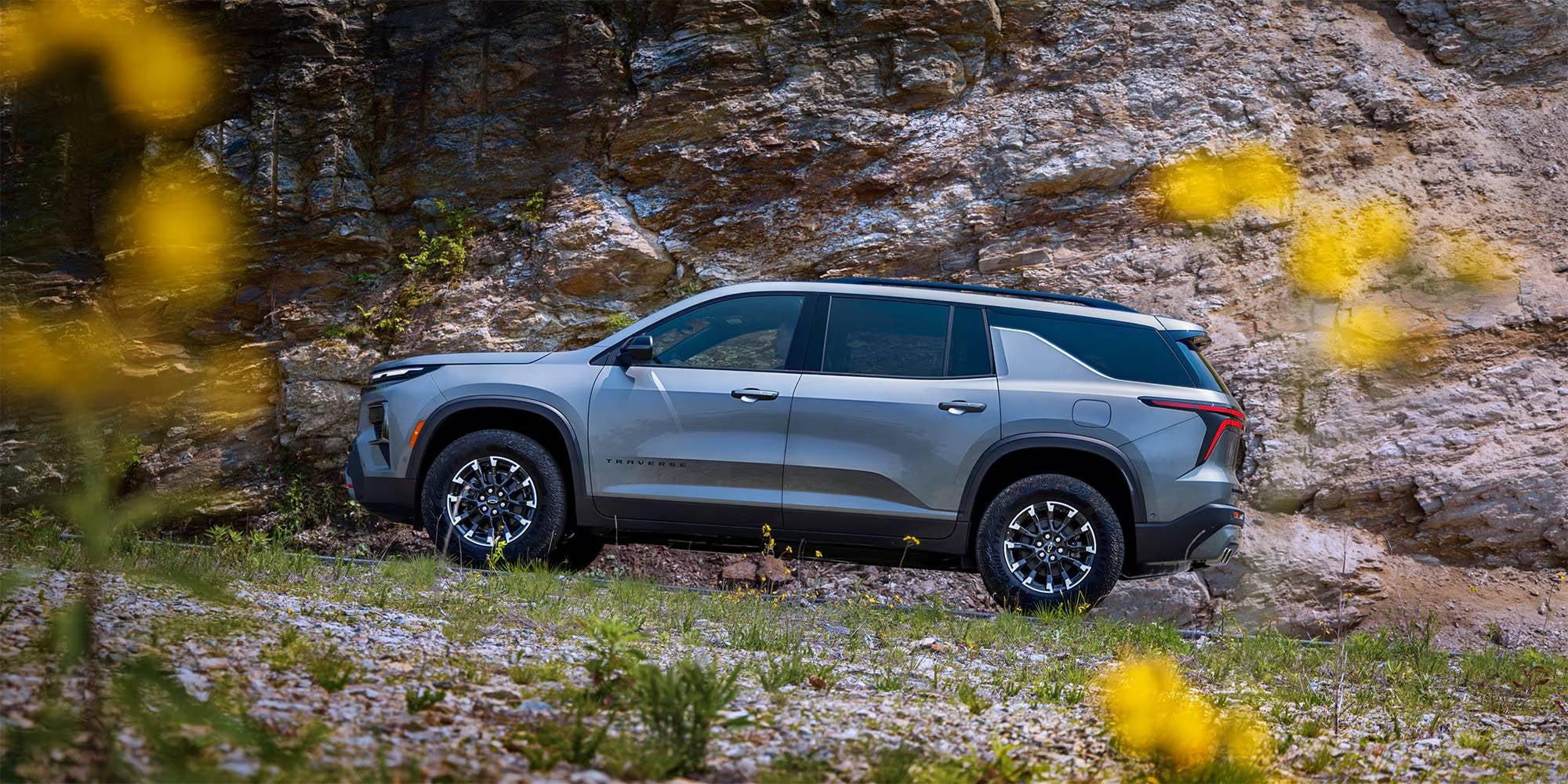
2026-traverse-design-01

2026 Chevrolet Traverse vs 2026 VW Atlas

Choosing a three-row family SUV means weighing engine output against interior space, and figuring out whether extra tech features are worth the price difference. The 2026 Chevrolet Traverse and the 2026 Volkswagen Atlas are two of the strongest contenders in this segment, and they represent different ideas about what a family SUV should be. The Atlas leans into approachable pricing and a straightforward feature set, while the Traverse is built around stronger performance, more passenger space, and technology that actively supports family life. Both vehicles serve families well, but line them up side by side and the differences start to matter. For families in Tacoma, WA hauling gear toward Mount Rainier, those differences can shape which SUV actually fits daily life. If you'd like to see the Traverse in person, you can browse new Chevrolet models at Titus-Will Chevrolet. Performance and Powertrain Comparison The Traverse arrives with a clear performance advantage. Its 2.5L turbocharged inline-four produces 328 hp and 326 lb-ft of torque, paired with an eight-speed automatic transmission. The Atlas relies on a 2.0L turbocharged four-cylinder rated at 269 hp and 273 lb-ft of torque. That gap translates directly into stronger acceleration and better towing capability for the Traverse, which matters for families hauling trailers, boats, or camping gear toward Puget Sound or up into the mountains. Both SUVs deliver smooth power delivery in everyday driving, but the Traverse combines its stronger output with competitive fuel efficiency, so you're not trading economy for power. That makes it the more compelling choice for drivers who want confidence at highway speeds or when merging onto busy Tacoma-area roads with a full load of passengers. Off-Road Capability: Traverse Z71 vs Atlas If your weekends include logging roads or the kind of rugged Pacific Northwest terrain that demands real traction, the Traverse Z71 trim deserves a look. It's built with all-terrain tires, a raised suspension, and off-road-tuned driving dynamics designed to help the vehicle hold traction on uneven or slippery surfaces. It also includes the AutoSense Power Liftgate, and the RS and High Country trims add One-Touch Fold second-row seats for quick cargo access. The Atlas offers available 4Motion AWD and handles typical mixed-condition driving reasonably well, but Volkswagen doesn't offer a dedicated off-road trim to match the Z71. Pavement commuters will find the Atlas holds its own just fine. Once you start leaving the pavement behind on a regular basis, though, the Z71 offers capability the Atlas simply can't touch. Technology and Infotainment Features Modern families lean on their vehicles for connectivity as much as transportation, and both SUVs reflect that. The Traverse features a 17.7-inch diagonal infotainment touchscreen with Google built-in. Drivers get Google Maps, Google Play, and the Google-powered in-vehicle assistant right on the dash, along with a standard 11.0-inch digital gauge display. The Atlas offers a 12.0-inch infotainment display paired with a 10.25-inch Digital Cockpit Pro gauge cluster. The larger Traverse screen and more intuitive interface make it easier to navigate menus or adjust settings without taking your eyes off the road for long. The Traverse also offers Super Cruise™, a hands-free driving system that comes standard on the High Country and RS trims and is available on the others. It works on more than 585,000 miles of compatible roads across the U.S. and Canada, including many stretches families might use commuting or road-tripping. The Atlas has no comparable hands-free system, which gives the Traverse a meaningful technology edge for long highway stretches. Ready to compare these features in person? You can schedule a test drive at Titus-Will Chevrolet and try the Google built-in system and Super Cruise for yourself. Passenger Space and Seating Comfort The Traverse seats up to eight with bench seating or seven with available captain's chairs, while the Atlas tops out at seven. That extra flexibility matters for larger families or carpooling duty. The Traverse also offers more shoulder room, measuring 62.28 inches in front, 62.17 inches in the second row, and 57.72 inches in the third row, an advantage that shows up on longer drives when adults are riding in the back seats. The Traverse's Smart Slide Seats make third-row entry and exit easier, cutting down on the awkward maneuvering that makes second-row passengers dread climbing through. Standard heated front and rear seats, a heated steering wheel, and three-zone climate control round out the comfort features. The Atlas's third row is noticeably tighter for adult passengers, and Volkswagen doesn't offer an equivalent seat-sliding feature. Families who actually use all three rows on a regular basis will notice the difference the Traverse's layout makes. Cargo Capacity and Storage Versatility Space behind the passengers matters just as much as space for them. The Traverse offers up to 97.6 cubic feet of maximum cargo room with the rear seats folded, 56.6 cubic feet behind the second row, and 22.9 cubic feet behind the third row. The Atlas offers 96.6 cubic feet of maximum cargo space, close to the Traverse's figure but still slightly behind. That extra room adds up when you're loading gear for a trip toward the coast or across Washington State, whether it's sports equipment, strollers, or a week's worth of vacation luggage. Both SUVs offer thoughtful in-cabin storage, but the Traverse's larger overall footprint gives families more flexibility when packing for a full house. Why the 2026 Chevrolet Traverse Is the Smarter Choice The Traverse leads across several categories that matter most to active families, not just one. Chevrolet's engineering gives it an edge in horsepower, torque, and towing. The Z71 trim brings genuine off-road ability the Atlas can't match. The infotainment system is larger and easier to use, Super Cruise adds hands-free capability on compatible roads, and the Traverse seats more people more comfortably while carrying more cargo when needed. Ownership costs matter too. Kelley Blue Book's 5-Year Cost to Own estimates and J.D. Power ratings show meaningful gaps between three-row SUVs in this class when it comes to predicted maintenance and resale value, and Consumer Reports data can help buyers compare long-term reliability trends before deciding. Translating those scores into plain terms: a vehicle with stronger predicted reliability generally means fewer unplanned repair visits and better resale value down the road, which is worth factoring in alongside sticker price. Because pricing and specifications are subject to change, we recommend you contact our team to confirm current MSRP and trim availability before making a final decision. The Atlas suits buyers with straightforward needs just fine. But families juggling school runs during the week and mountain trips on the weekend will find the Traverse delivers a more complete package. Schedule Your Traverse Test Drive Visit Titus-Will Chevrolet in Tacoma If you're ready to see what the 2026 Chevrolet Traverse can do, Titus-Will Chevrolet is the place to start. Located at 11011 Pacific Ave S in Tacoma, we've served Tacoma, Olympia, Puyallup, Lakewood, and nearby Pacific Northwest communities since 1938. Standout reasons to consider the Traverse include its 328-hp turbocharged engine, the off-road-ready Z71 trim, and standard technology like the 17.7-inch touchscreen with Google built-in. Next Steps We carry a full inventory of new Chevrolet models along with certified pre-owned vehicles and flexible financing options for a range of credit profiles. If you're ready to move forward, you can start a credit application online or schedule a test drive at a time that works for you. You can also call our sales team directly at 253-448-8157 with any questions. Get behind the wheel of the Traverse and see for yourself why it's the right pick for families across the region.

27-equinox-performance-desk-01

What's New in the 2027 Chevrolet Equinox?

The Chevrolet Equinox has long been one of the most practical compact SUVs on the market, and the 2027 model year brings meaningful upgrades to the driving experience, functionality, and styling. Chevrolet replaced the CVT with an eight-speed automatic on FWD models, increased towing capacity, added a Connected Cameras feature, and introduced a new exterior color. If you've been watching the Equinox evolve, or you're simply shopping for a capable, well-priced SUV, the changes between the 2026 and 2027 model years are worth a closer look. Major Upgrades Over the 2026 Model The gap between the 2026 and 2027 Equinox goes beyond looks. Chevrolet made targeted improvements aimed at real-world driving needs, and the 2027 model is a noticeably better package for it. New Eight-Speed Automatic Transmission The switch from a CVT to an eight-speed automatic on FWD models is the biggest change for 2027, bringing them in line with AWD trims that already used the eight-speed. CVTs are known for fuel efficiency, but plenty of drivers find them dull to drive. The eight-speed automatic brings a more traditional, engaging feel while still holding onto strong efficiency across daily commutes and highway stretches. Acceleration feels more natural, and the transmission responds better when you need quick power, an improvement over the 2026 FWD Equinox's CVT. Increased Towing Capacity Towing capacity also gets a real bump for 2027. Both FWD and AWD models are now rated to tow up to 1,500 lbs, nearly double the 800 lbs the 2026 FWD Equinox could handle. That extra capacity opens the door to weekend trips, light hauling, or pulling a small trailer, without needing to move up to a bigger SUV. Connected Cameras Feature Safety tech gets a boost with the new Connected Cameras feature, available with the Safety and Technology package. It's designed to add exterior and interior remote viewing through the MyChevy app, along with dash-cam functionality, something the 2026 Equinox didn't offer. The camera hardware is installed at the factory, but Chevrolet plans to activate the feature later through an over-the-air update rather than at launch, so early buyers should confirm timing with us. Once enabled, whether you're keeping an eye on the vehicle in a parking lot or reviewing footage after a drive, Connected Cameras is set to give owners a level of security and situational awareness that wasn't available on last year's model. Autumn Harvest Metallic Exterior Color On the style side, Chevrolet introduces Autumn Harvest Metallic as a new exterior color, replacing the discontinued Cacti Green. It's a warm, distinctive tone that sets the 2027 Equinox apart on the road and gives buyers another good-looking option when personalizing their vehicle. The 2027 RS trim also gets an interior update, with Torch Red stitching replacing the 2026 RS's Santorini Blue and Torch Red combination. Performance and Technology Differences The 2027 Equinox carries over the 175-hp turbocharged 1.5L four-cylinder engine from 2026, so the core powertrain balance of power and fuel economy hasn't changed. Torque output depends on drivetrain: FWD models produce 184 lb-ft, while AWD models produce 203 lb-ft. That extra torque on AWD trims is useful in practice, it helps with traction in slippery conditions and gives a meaningful edge when towing near the Equinox's limit. Fuel economy on FWD models is estimated at 25 mpg city and 26 mpg combined, a slight dip from the 2026 model's 26 mpg city and 27 mpg combined due to the new transmission. The real change this year is how that power gets delivered. The new eight-speed automatic noticeably improves acceleration, especially in city driving where quicker gear changes make a difference you can actually feel in traffic, all while keeping the efficiency compact SUV buyers count on. Driver assistance features carry forward as well, including adaptive cruise control and automated emergency braking, so safety technology remains a strong point across LT, RS, and Activ trims. Infotainment and Interior Technology Step inside the 2027 Equinox and the interior immediately feels modern and easy to use. The centerpiece is an 11.3-inch touchscreen running Google Built-In, which supports wireless Apple CarPlay and Android Auto so you can connect your phone without messing with cables. An 11-inch digital driver display sits ahead of the driver, keeping key vehicle information right in your line of sight, and an available 5G Wi-Fi hotspot keeps everyone connected on the road. Comfort features round out the package in a way that's hard to find standard at this price. Heated front seats and a heated steering wheel come included on many trims, a nice bonus once winter settles in around the Pacific Northwest. The interior layout is clean and organized, with intuitive controls and smart storage placement throughout the cabin. Passenger Space and Cargo Capacity The 2027 Equinox seats five, with the cabin designed for good legroom and easy entry in every seat. Behind the second row, you'll find about 29.8 cubic feet of cargo space, plenty for grocery runs and weekend bags. Fold the 60/40 split-folding rear seat down and that number jumps to 63.5 cubic feet, which makes the Equinox genuinely useful for moves, outdoor gear, or whatever else needs the extra room. For families, commuters, and active drivers, that mix of passenger comfort and cargo flexibility remains one of the Equinox's strongest everyday selling points, unchanged from 2026 but still a segment strength. Why the 2027 Equinox Is the Better Choice The compact SUV segment is crowded, with strong contenders like the Toyota RAV4 and Honda CR-V competing hard for the same buyers. The 2027 Equinox answers that competition with affordability and real-world practicality, now backed by a more satisfying drivetrain. The 2027 updates tackle the spots where earlier Equinox models took criticism. Drivers who found the outgoing CVT uninspiring will notice the eight-speed automatic's more engaging feel right away. Owners who occasionally tow a small trailer or light hauling equipment benefit directly from the jump to 1,500 lbs of towing capacity on both FWD and AWD models. And buyers who value peace of mind when the vehicle is parked or unattended will get real use out of the Connected Cameras feature once Chevrolet activates it through the planned over-the-air update. AWD shoppers specifically gain the added benefit of 203 lb-ft of torque, which helps with traction in poor weather and adds confidence when towing near capacity. If you're after a compact SUV that works hard, looks sharp, and doesn't ask you to overspend, the 2027 Equinox makes a strong case for itself across its LT, RS, and Activ trims. Schedule Your 2027 Equinox Test Drive at Titus-Will Chevrolet Visit Us in Tacoma, WA Reading about updates is one thing. Experiencing them on the road is another. Titus-Will Chevrolet, located at 11011 Pacific Ave S in Tacoma, WA, invites you to come see the 2027 Equinox in person. Titus-Will serves the greater Tacoma area, including Olympia, Puyallup, Lakewood, and Joint Base Lewis-McChord, and has been part of the Pacific Northwest community since 1938 as Washington State's largest volume auto group. Book Your Test Drive Our team can walk you through the LT, RS, and Activ trims, help you find the right configuration for your lifestyle, and connect you with flexible financing options that work across all credit profiles. If you'd rather start the process from home, online purchasing and home delivery are available too. To ask questions or schedule your test drive, contact our team or call 253-448-8157. With over 85 years of experience, Titus-Will Chevrolet makes finding your next vehicle a straightforward, confident experience.

Silverado

2026 Chevrolet Silverado Vs 2026 Toyota Tundra

Choosing between the 2026 Chevrolet Silverado and the 2026 Toyota Tundra is one of the most common debates among full-size truck buyers right now. Both are serious contenders with loyal followings. But when you break down towing numbers, trim availability, and day-to-day usability, a clear picture starts to emerge. At Titus-Will Chevrolet, we think the 2026 Chevrolet Silverado 1500 is the stronger choice for most buyers in the Tacoma area, and the specs back that up. These two trucks reflect genuinely different philosophies. The Silverado is built around versatility, with a wide range of powertrains and trim levels suited to everyone from weekend campers to commercial contractors. The Tundra leans into modern technology and a refined driving experience, with an impressive hybrid option and a premium feel. Knowing where each excels is what helps you make the right call. Engine and Powertrain: Power for Every Job Your engine choice shapes fuel economy, towing capacity, daily driving feel, and long-term reliability. It's one of the most telling differences between these two trucks. 2026 Chevrolet Silverado 1500 Powertrains Chevrolet gives Silverado 1500 buyers four distinct options: the TurboMax 2.7L turbo-four, the 5.3L EcoTec3 V8, the 6.2L EcoTec3 V8, and the 3.0L Duramax Turbo-Diesel. That kind of selection is genuinely rare in this segment. The TurboMax 2.7L has become a standout choice for drivers who want capable performance without sacrificing fuel efficiency, delivering strong low-end torque for its displacement class. The 5.3L EcoTec3 V8 has built a long reputation for real-world reliability, and long-term Silverado owners who tow or haul regularly frequently cite its durability. The 6.2L EcoTec3 V8 steps things up further for buyers who want maximum gas performance. For consistent heavy towing over distance, the 3.0L Duramax Turbo-Diesel rounds out the lineup with torque figures purpose-built for that kind of work. 2026 Toyota Tundra Powertrains The 2026 Toyota Tundra takes a more focused approach. Toyota offers the i-FORCE twin-turbo V6 as the standard engine and the i-FORCE MAX hybrid as an available upgrade, pairing that same V6 with an electric motor for strong torque and immediate throttle response. The hybrid setup is genuinely impressive from an engineering standpoint, and for buyers prioritizing efficiency or sustainability, it makes a real case. The Tundra doesn't offer a diesel option or a larger V8 alternative. For buyers who want to match their powertrain to a specific job, that narrower selection may feel limiting. The Silverado simply offers more ways to do that. Towing and Payload: Where the Silverado Pulls Ahead On raw capability, Chevrolet's numbers lead. The 2026 Silverado 1500 is rated to tow up to 13,300 lbs when properly equipped, compared to Toyota's maximum towing rating of 12,000 lbs for the Tundra. On payload, the Silverado carries up to 2,260 lbs, while gas-powered Tundra models are rated at up to 1,940 lbs. These aren't cosmetic differences. For drivers hauling a loaded trailer through the Pacific Northwest, or carrying equipment in the bed for a full week's work, that margin adds up. The Silverado also comes equipped with an advanced trailering technology package, including Trailer Sway Control, an integrated trailer brake controller, and an available 15-camera surround vision system. These tools simplify towing considerably for drivers who don't hook up every day but need confidence when they do. The Tundra's hybrid powertrain does deliver torque quickly, which helps when pulling from a stop or climbing grades. But on raw towing numbers and the breadth of trailering support, the Silverado consistently comes out ahead. If you'd like to talk through how these specs align with your towing needs, get in touch with Titus-Will Chevrolet and we'll help you find the right configuration. Trim Options and Off-Road Capability The Silverado's lineup runs deep. The 2026 Silverado 1500 is available in nine trims: WT, Custom, Custom Trail Boss, LT, LT Trail Boss, RST, LTZ, High Country, and ZR2. Three dedicated off-road trims (Custom Trail Boss, LT Trail Boss, and ZR2) mean you don't have to choose between capability and your preferred price point. That's a meaningful range, covering basic work trucks through fully loaded luxury haulers. The ZR2 deserves specific mention. It's a purpose-built off-road machine featuring Multimatic DSSV dampers, front and rear locking differentials, high-clearance rocker protection, and an available Bison Edition with underbody armor. For off-road enthusiasts tackling rugged terrain around the Pacific Northwest, it's one of the more capable half-ton options on the market. The 2026 Toyota Tundra covers ten total configurations: five gas trims (SR, SR5, Limited, Platinum, 1794 Edition) plus five hybrid trims (Limited i-FORCE MAX, Platinum i-FORCE MAX, 1794 Edition i-FORCE MAX, TRD Pro, and Capstone). The TRD Pro is a capable off-road option with a lift, skid plates, Fox shocks, and all-terrain tires. The Silverado ZR2 edges ahead in sheer off-road engineering and available protection packages, though, and the broader trim ladder gives more buyers a clear home in the lineup. Technology, Interior, and Everyday Comfort Inside the cab, both trucks deliver a comfortable, well-equipped experience, but each takes a different approach. Silverado's Interior The Silverado's interior is designed with practical usability in mind. Starting with the LT trim and above, the 13.4-inch diagonal touchscreen with Google built-in supports natural voice commands, turn-by-turn navigation, and smooth smartphone integration. It is not standard on every trim, so buyers focused on that feature should confirm it's included in the configuration they're considering. Controls are logically placed, and the overall layout feels familiar from the first drive. The Multi-Flex tailgate, available on several trims, offers six different configurations that make loading and accessing the bed significantly easier. Pair that with the available panoramic moonroof, heated and ventilated seats, and heated steering wheel across a range of trim levels, and you get a cabin that works equally well on job sites and road trips. Tundra's Interior The Tundra goes for a more premium aesthetic, with a large infotainment screen and upscale materials in higher trims. The cabin quality in top-tier Tundra configurations is genuinely impressive and approaches a near-luxury experience. Some drivers find the interface takes time to learn, particularly for accessing common functions, but it's a polished setup overall. For everyday practicality and usability from day one, the Silverado wins. The combination of Google built-in, the Multi-Flex tailgate, and a wide spread of comfort features across mid-range trims makes it easy to get into a well-equipped truck without climbing to the top of the lineup. Why the 2026 Chevrolet Silverado 1500 Is the Better Truck The case for the Silverado comes down to versatility. On towing capacity, trim variety, off-road capability, and interior usability, the Silverado consistently offers more options and stronger performance where it counts most. The Tundra isn't a bad truck. Its i-FORCE MAX hybrid powertrain is genuinely forward-thinking, and its premium interior gives it real appeal for buyers who prioritize a refined ride. For the widest range of buyers, though, the 2026 Silverado 1500 simply does more. Proven engine options, class-competitive towing ratings, advanced trailering technology, and nine trims add up to a truck that works whether you're commuting daily, towing on weekends, or running a crew out of Tacoma. In a head-to-head comparison of the 2026 Chevrolet Silverado vs 2026 Toyota Tundra, the Silverado's long track record and adaptability across work and personal use make it the stronger pick for most buyers in this market. Schedule a Test Drive at Titus-Will Chevrolet Reading about a truck and actually driving one are entirely different experiences. Getting behind the wheel is the best way to settle this comparison for yourself. Come out to Titus-Will Chevrolet, located at 11011 Pacific Ave S in Parkland, WA, and see the 2026 Silverado 1500 firsthand. Our team can walk you through the full trim lineup, help you explore configurations that fit your needs, and get you out on the road for a test drive. When you're ready to make a move, contact our team or call us at 253-448-8157. Sales are available seven days a week, and we look forward to helping you find the right truck.